
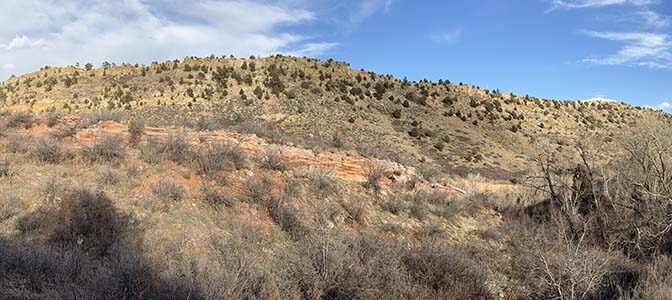
Pokealong Geology — Part B
Making Bacon: Life in the Layers
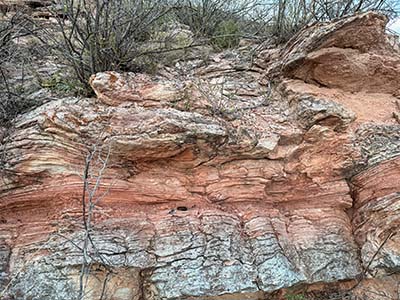
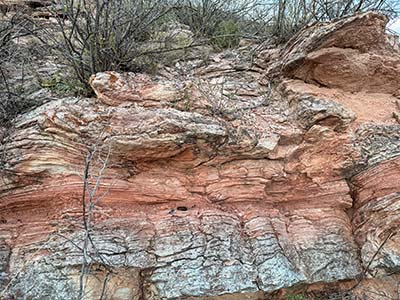
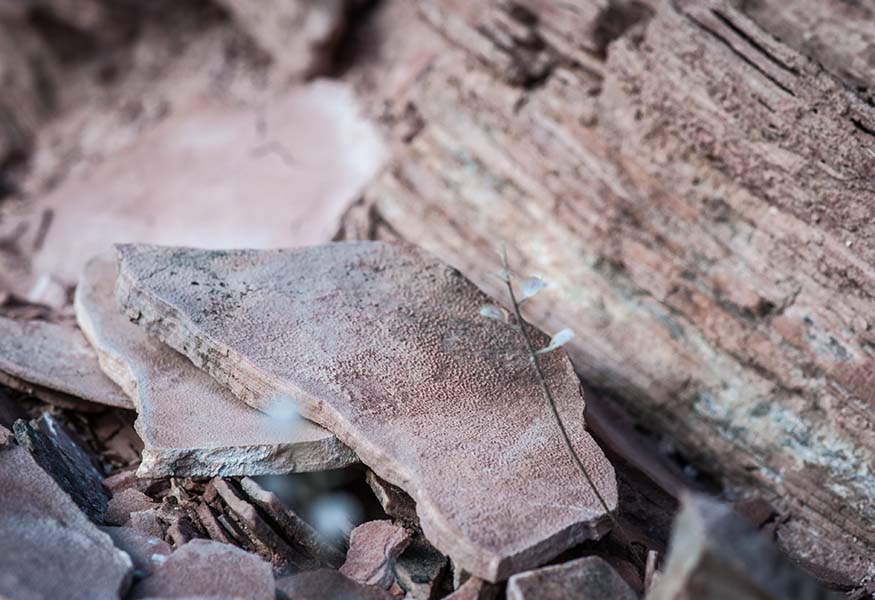
Before reading another word, look at the photograph.
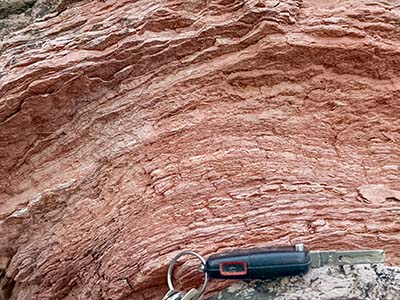
What do those thin, crinkled red and pale layers remind you of?
A. Sedimentary rock
B. Geological strata
C. Microbial structures
D. Bacon
E. None of the above
Don’t worry.
There isn’t a grade.
But I chose D.
Welcome to what I have spent years calling the Bacon Layers.
This is not an officially recognized geological formation.
No geological survey has adopted my terminology.
No committee has approved of it.
So far as I know, nobody at the School of Mines is campaigning on my behalf.
This is pure field dorkery.
But I have evidence.
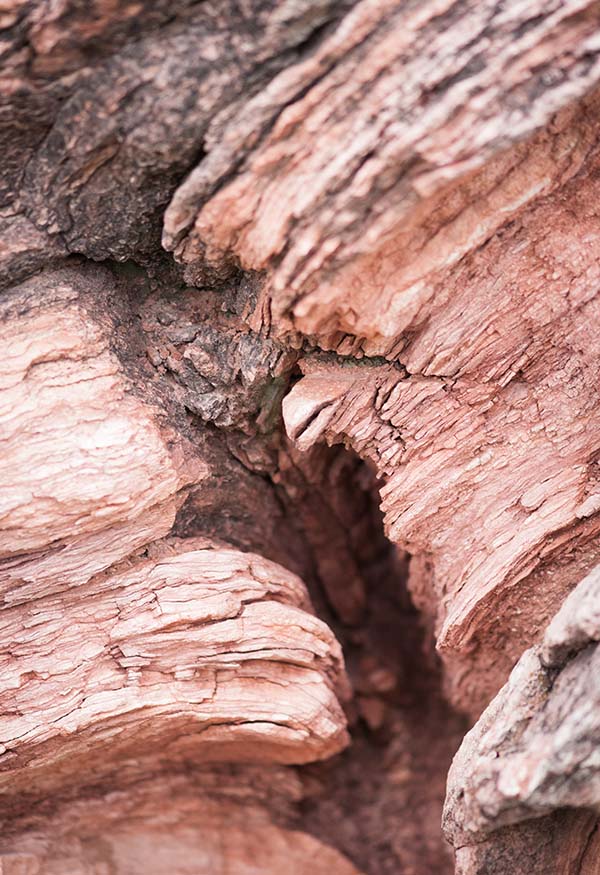
The Four Principles of Making Bacon
One: Making bacon.
We all know the expression.
Making bacon.
Bring home the bacon.
Money.
Dollar signs.
Human beings have managed to attach economic meaning to pork, which seems like an excellent start.
Two: It looks like bacon.
Look at those crinkled red and pale lamentations.
Come on.
I’m not doing all the work for you.
Three: Bakin’.
B-A-K-I-N-G.
The rocks we’re examining belong to a chapter of Earth history associated with enormous environmental changes, eventually approaching the Permian-Triassic transition the greatest known mass extinction in Earth’s history.
The joke is better than the paleo-climate model, so don’t confuse the two.
“Bakin’” is a mnemonic.
Geology is considerably more complicated.
Four: The underbelly of the hogback.
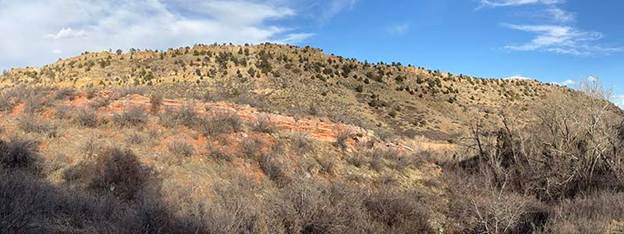
There it sits beneath the great, tilted strata of the hogback.
Makin’ Bacon.
Bacon Looking.
Bakin’ Planet.
Bacon the Underbelly of Hogback.
Four independent lines of pork-based reasoning.
I rest my case.
Now we can get back to science.
What Are We Actually Seeing?
The real rocks belong to the Lykins story of this landscape.
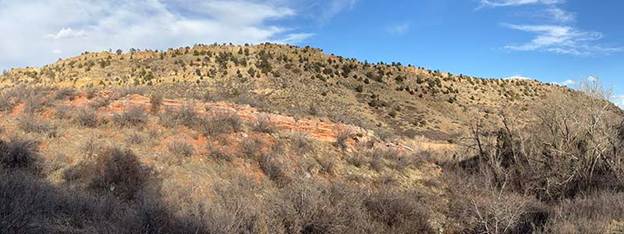
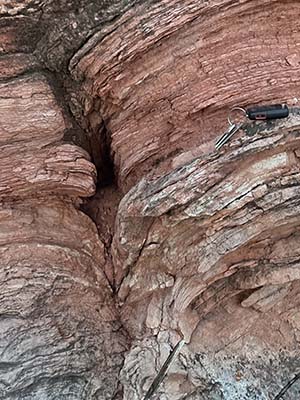
Here geology includes redbeds, carbonate rocks and evaporite-bearing intervals. Environments changed over time, and some of the carbonate layers in the Lykins preserve structures associated with microbial communities.
And this is where words become important.
A strange, rounded rock is not automatically Bacon.
A wrinkled layer is not automatically evidence of life.
A bowl-shaped stone isn’t automatically an artifact.
Resemblance gives us a question. Context gives us evidence.
That distinction is one of the most useful things science can teach us.
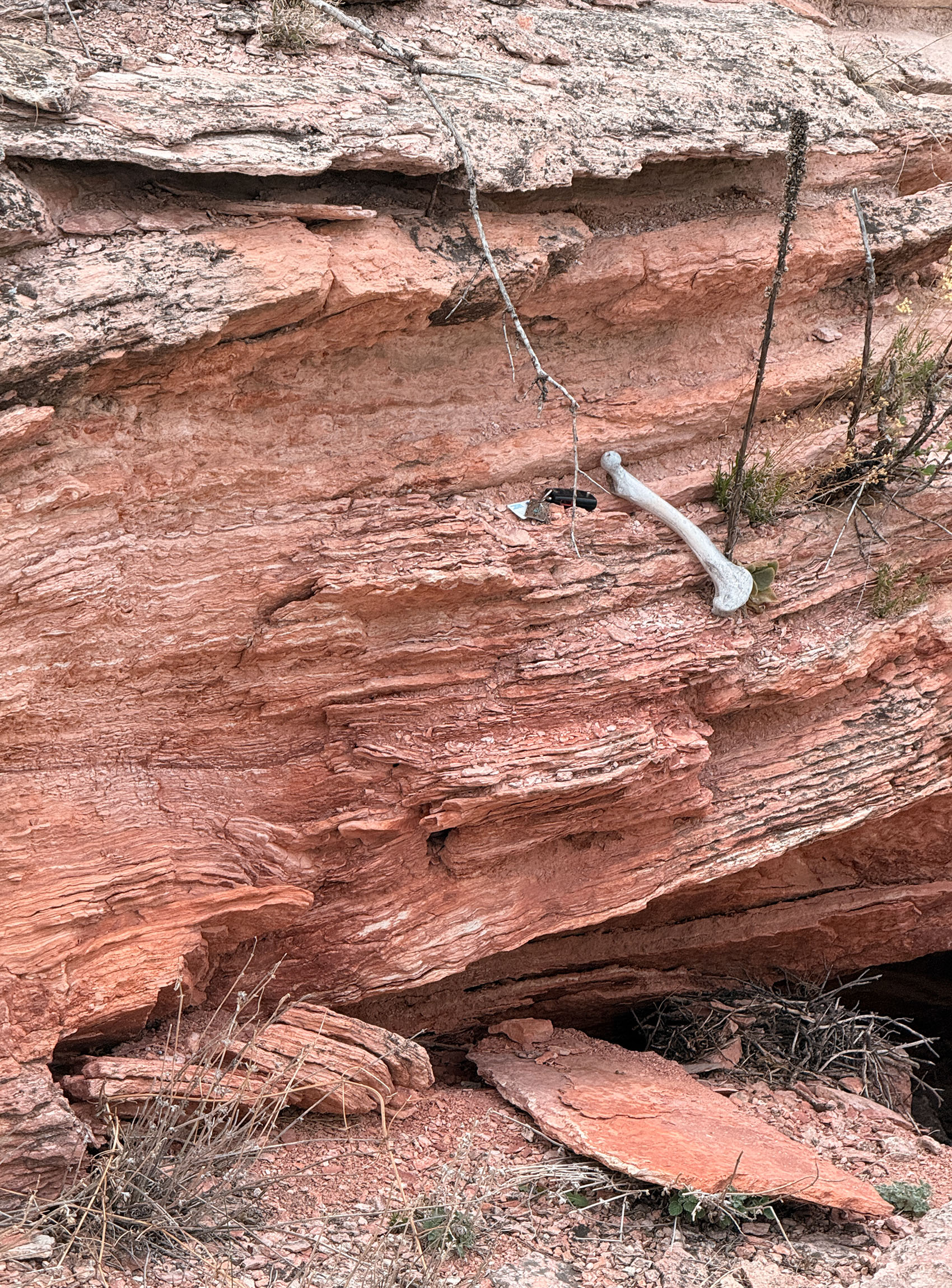
A Fossil That Isn’t a Bone
When most people hear the word fossil, they picture something that was once an individual organism.
A dinosaur bone.
A shell.
A leaf.
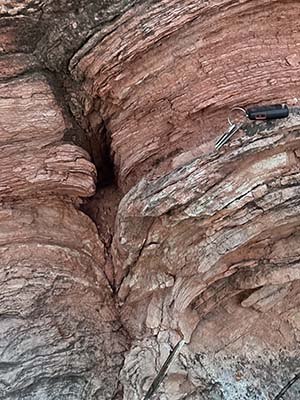
Bacon makes that idea wonderfully uncomfortable.
Bacon is not simply the fossilized corpse of a plant or animal.
These Bacon Lykin’ structures form through the interaction of microbial communities and sediment. Cyanobacteria and other microorganisms form microbial mats that can trap, bind and influence sediment as layer follows layer. Over immense periods of time, those structures can become part of the rock record.
So sometimes the evidence of ancient life isn’t a body.
It’s something life did.
That changes the question.
Instead of asking:
What animal was this?
We might ask:
What process made these layers?
Look Before You Name
This is where the photographer’s hike from Part A matters.
Look closely.
Change scale.
Follow a layer.
Notice whether it repeats.
Notice whether a form is attached to the bed or lying loose.
Ask what is sitting above it.
Ask what sits below it.
And don’t be afraid to say:
I don’t know yet.
That’s not the failure of investigation.
That’s investigation working properly.
The Bonsai Stone
Then there is one loose block I call the Bonsai Stone.
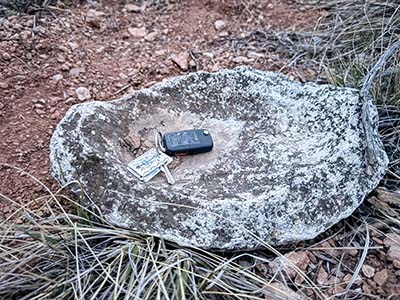
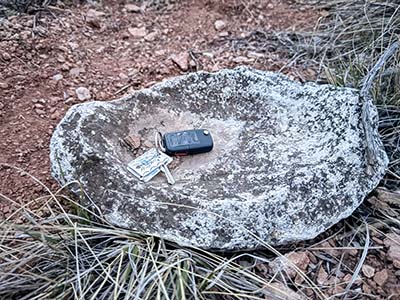
It has a wonderful basin-like form, almost as though somebody designed it.
Nature has since added vegetation and lichen, completing the composition without consulting me.
It occurs near carbonate beds and other rounded forms, but this landscape has also experienced natural erosion, historic quarrying, blasting and prying.
Loose rocks move.
People move rocks.
Gravity moves rocks.
Context gets scrambled.
Which makes another question irresistible.
Did Somebody Use It?
A large basin-shaped stone invites human imagination.
Was a similar stone ever used for grinding?
Seeds?
Chokecherries?
Pigment?
Something else?
Maybe.
But maybe isn’t evidence.
An archaeologist would want more: wear, polish, pecking, residue, associated artifacts or evidence that a stone had been deliberately positioned and stabilized.
Until then, it remains an interesting stone with an interesting question.
And that’s enough.
Leave Something for the Next Kid
You’ll notice I’m not giving directions to these exposures.
That’s deliberate.
There are places where curiosity needs a little restraint.
A photograph can teach.
A drawing can explain.
A close-up can reveal extraordinary structure.
None of those require turning a sensitive geological site into a treasure map.
If you find something interesting:
Look.
Photograph.
Sketch.
Ask questions.
Then consider leaving it exactly where you find it.
The next curious squid deserves a chance to see it too.
Where’s Yeti?
Human eyes are extraordinarily good at finding patterns.
Faces in clouds.
Animals in rocks.
Footprints where there may only be erosion.
Somewhere in every project there ought to be room for a Yeti.
Not because Yeti proves anything.
Quite the opposite.
Yeti reminds us to ask:
What did I actually observe?
What did I infer?
And what did my wonderfully troublesome human brain add afterward?
Science doesn’t require us to stop imagining.
It requires us to know when we’re imagining.
The Trail That Doesn’t Go There
And that brings us back to names like Bacon.
The short trail through the drainage I call No Name Creek eventually acquired an official name:
Will Call Trail.
The name came from the nearby concert ticket operation.
There was just one problem.
The trail didn’t take people to Will Call.
For a while, confused visitors occasionally appeared where they weren’t supposed to be, apparently expecting concert tickets.
Eventually I explained the problem, and the sign at the upper end came down.
The trail remained.
So did the name.
Which may be one of the better lessons this landscape has taught me:
Don’t assume the label tells you where you’re going.
“Red rock” doesn’t tell you how the rock formed.
Something that looks like bacon isn’t bacon.
Something that resembles a fossil isn’t necessarily a fossil.
A basin isn’t necessarily a grinding stone.
And apparently—
Will Call will not.
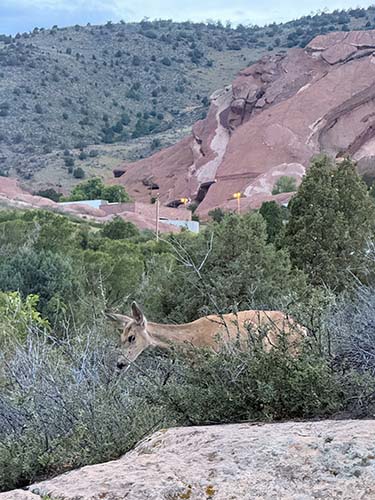
A photographer’s hike doesn’t necessarily get you very far.
That’s the point.
Sometimes you travel farther by stopping.
Look down.
Get closer.
Change scale.
Ask another question.
You may discover that the landscape you’ve walked through a hundred times contains another landscape inside it.
Then another.
Then another.
Maybe that’s what seeing is.
We were just looking at stromatolites.
Bacon is stromatolites.
But Bacon is still Bacon.