
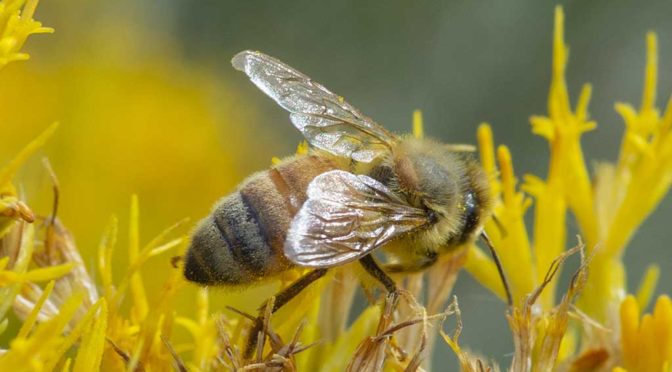
Exploring the Eco-Savvy Micro World of Insects
Spring, Summer, Winter and Fall at Red Rocks Park reveal more than towering sandstone and epic music. Hidden in the grasses, blooming flora, and crevices of stone lies a bio-diverse, unsung ecosystem—a microcosm of life teeming with insect drama, elegance, and survival.
Why Seeing Matters
Most mammals are natural dichromats. They sacrifice a wide color range to have more rod cells, which give them superior night vision. Primates, humans and bees evolved trichromatic vision later, prioritizing color detail over night vision to easily spot brightly colored food in trees.
Color Scale Breakdown
Dichromat, dogs, cats, horses, and mice have (2 cones). Two Cones: Distinguish roughly 10,000 colors. They lack the third cone type needed to create the exponential multiplication of shades. In humans, dichromacy is a form of color blindness where one of the three standard cone types is completely missing or non-functional.
Trichromats, bee vision, certain marsupials (like some opossums), and in Human vision “anomalous trichromacy” with (3 cones). Three Cones: Distinguish 1 million to 10 million colors. Among organisms that have trichromatic vision (three types of color-sensing cone cells), (red, green, and blue cones), there are different types of trichromacy based on whether the vision is standard, shifted, or a mild form of color deficiency.
Tetrachromats, most bird species, some lizards. frogs and turtles, insects like butterflies, multiple shallow-water fish species and some women have (4 cones). Fourth Cones: Distinguish up to 100 million colors. Tetrachromats possess a fourth cone cell that usually registers wavelengths in the orange-yellow spectrum. True tetrachromats can potentially distinguish up to 100 million colors. This condition rarely occurs almost exclusively in women because it requires two X chromosomes.
We as trichromats who can perceive million of colors have these three cone types that allows us to differentiate roughly 100 color nuances, and the brain combines these exponentially (100 × 100 × 100) to reach that million-plus range.
While humans see a spectrum of red, green, and blue, bees perceive the world through a combination of ultraviolet (UV), blue, and green light. Bees lack a photoreceptor for red light, red objects look black or dark gray to them, but their ability to see UV light opens up an entirely invisible world of patterns on flowers.
The Bee Color Spectrum
- Ultraviolet (UV) Channel: Detects wavelengths from 300 to 400 nm.
- Blue Channel: Detects wavelengths from 400 to 500 nm.
- Green Channel: Detects wavelengths from 500 to 600 nm.
- Red Blindness: Fails to register wavelengths above 650 nm.
Functional Benefits for Bees
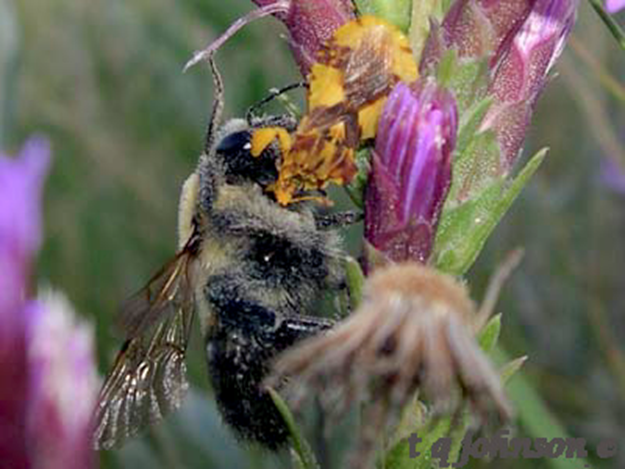
- Nectar Guides: Flower petals feature UV patterns that act like landing strips, guiding bees directly to the nectar and pollen.
- Speed and Navigation: UV light cuts through cloud cover, allowing bees to navigate by the position of the sun even on overcast days.
- Contrast Detection: The bee’s visual setup is highly optimized for spotting moving objects and contrasting floral edges against green foliage.
More about the way Humans see as a Trichromat
There’s more to the Beatles than rhythm and harmony—just ask our Cicada, who truly beats with the stars.
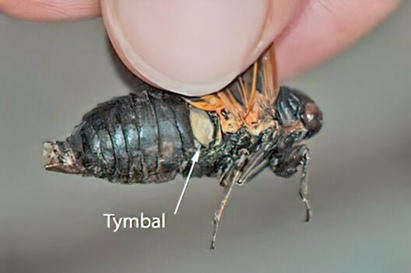
Featured Insect: Cicada
Class: Insecta
Order: Hemiptera
Family: Cicadidae (cicadas)
The Featured Cicada is a true bug. In this image it shows a Cicadas, Tymbal. It’s located just under the wings and on the top of the abdominal section. Sharing their love song with you through the serenading sounds. These sounds are actually made by the rhythmic vibrations of the Tymbals themselves. The Cicada chorus in groups can be surprisingly loud near the Red Rocks Park on the hot summer days, true Rock Stars.
Predators Among the Petals
Some think of lions, tigers, and bears as the planet’s top-tier predators—but we invite you to look closer. At Red Rocks, the smallest creatures wage the fiercest battles, often beneath our feet or just above the flowers.
Insect Drama: Mantis Death Match
Order: Mantodea
Family: Mantidae
Captured in a remarkable still by photographer T. Johnson, this image features a rare and brutal scene: two female praying mantises in a death-match duel. According to Professor C. Pearson, sightings of Mantidae were abundant during the 2018 season—evidence of a strong, thriving year for these apex insect predators.
In this photo, the victorious female has already severed her opponent’s forelimb, and is beginning to devour her alive—starting, as mantises often do, with the head.
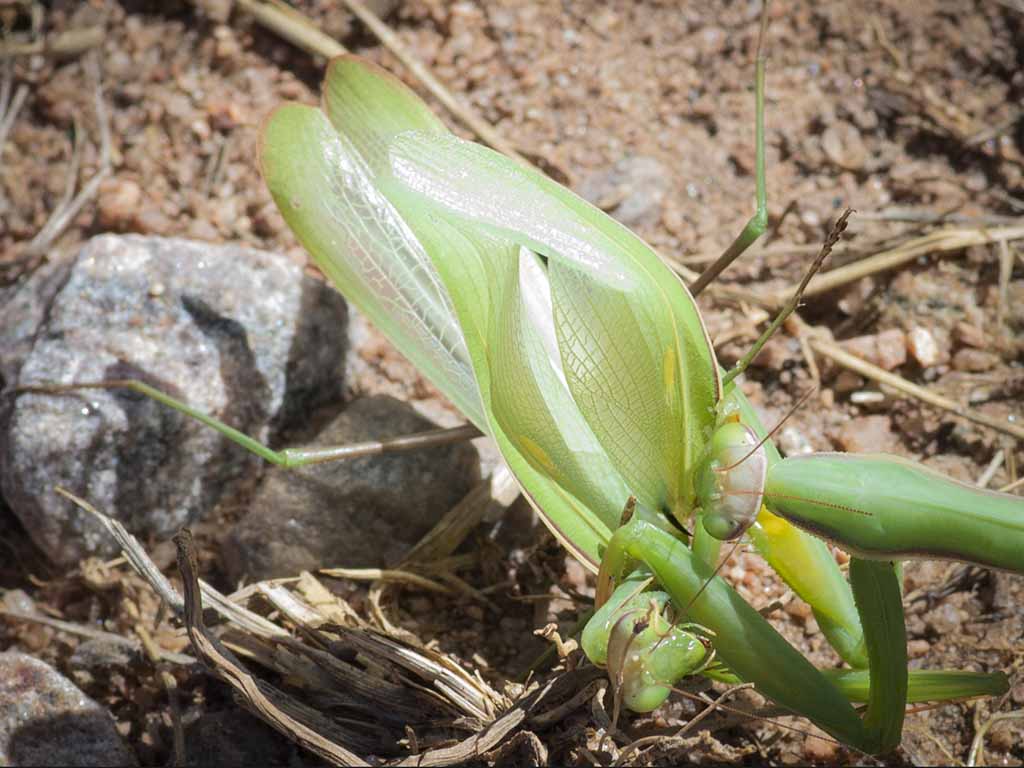
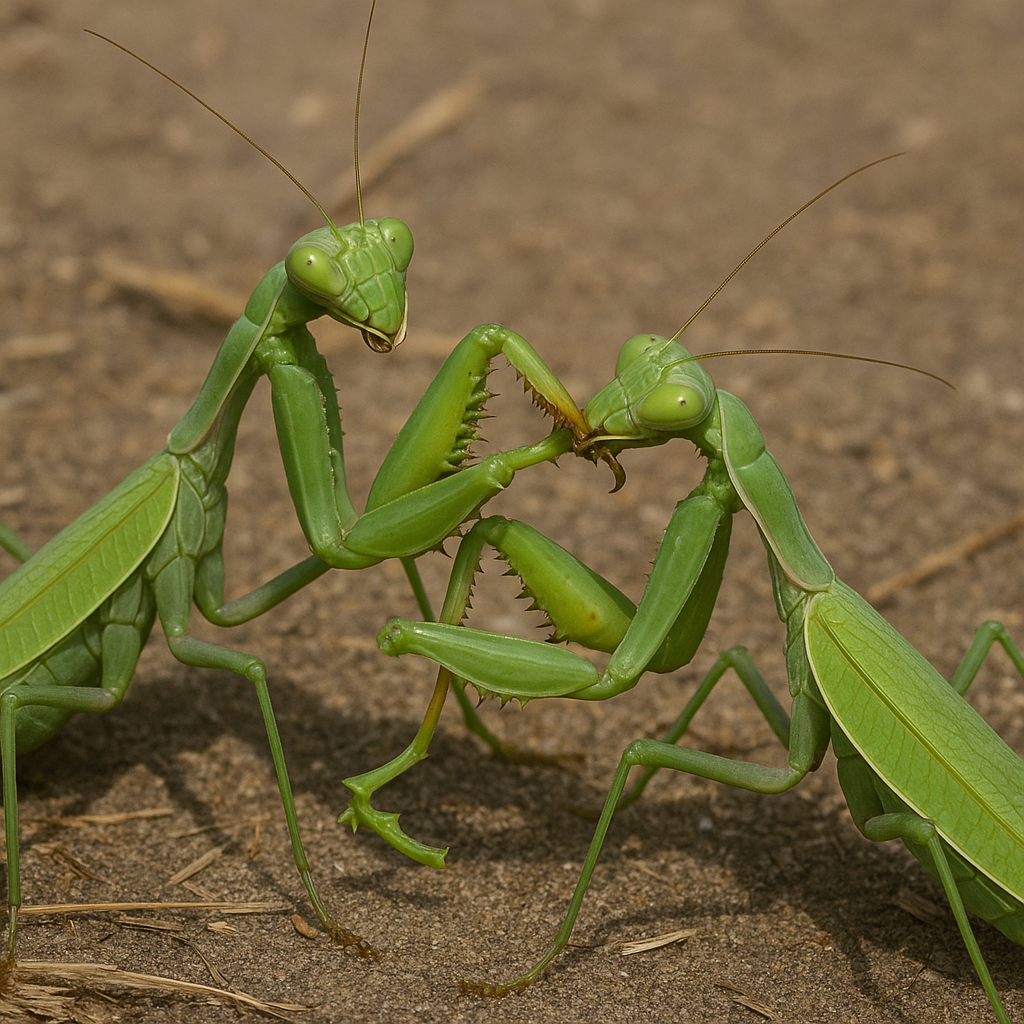
“This is likely a territorial battle,” says Dr. Pearson, “a kind of insect declaration: ‘I’ll eat you—and your little babies too.’”
Mantis Death Match
Female Mantodea, Mantidae disarming her rival with precision and finality.
Coming Soon: Red Rocks Insect Catalog
We are actively collecting, organizing, and presenting the insect fauna of Red Rocks Park by Order and Family. With new data and photography from years of fieldwork (and more to come), our blog and database will grow to feature everything from pollinators to predators.
Stay tuned for further posts and gallery updates.
Entomology reviewed and co written by C. Pearson, PhD. Multimedia and blogs by T. Johnson, BFA.
Photo by T. Johnson © 2026. All rights reserved.